City Logistics

Urban Delivery Systems

How sandwich delivery networks navigate city infrastructure, traffic patterns, and last-mile challenges across America's most densely populated urban corridors.

City Logistics & Delivery Infrastructure

Urban delivery systems for food β€” and sandwiches in particular β€” depend on a layered infrastructure that most customers never see. At the core of every successful delivery is a sophisticated interplay between physical city design, digital dispatch technology, and human courier networks.

American cities have become testing grounds for increasingly efficient last-mile delivery models. Chicago's grid layout, New York's density, and Los Angeles's sprawl each present entirely different logistical challenges β€” and sandwich delivery operations must adapt their routing, vehicle choices, and staffing models accordingly.

The logistics backbone includes dispatch software that tracks courier positions in real time, machine-learning algorithms that predict order surges before they happen, and zone-based delivery models that assign couriers to geographic cells rather than individual addresses β€” reducing empty travel time dramatically.
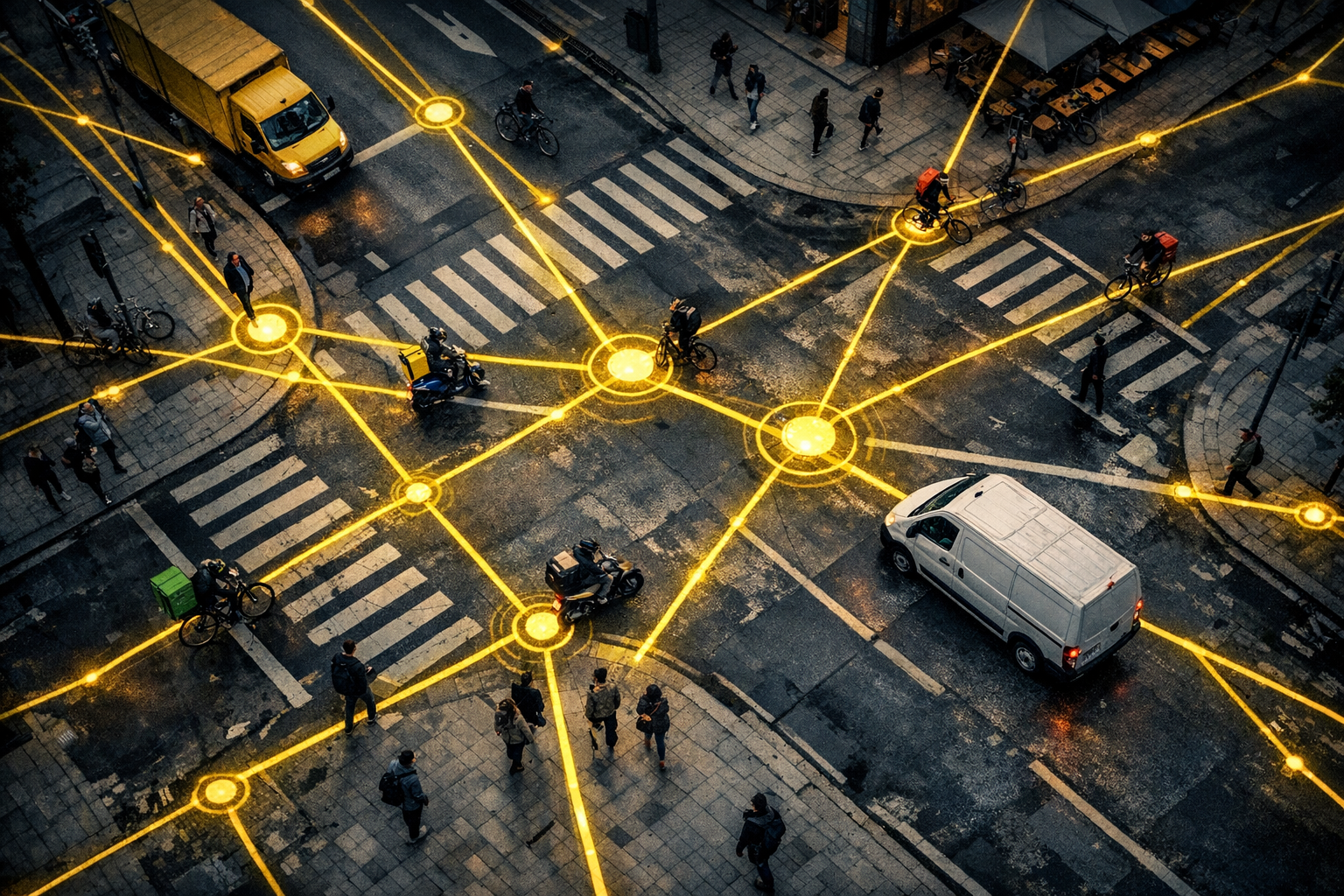
Aerial view of city intersection with delivery route network highlighted in yellow
City Logistics Network

Delivery Zones, Routes & Network Design

πŸ—ΊοΈ

Zone Mapping

Delivery platforms divide urban areas into hexagonal or square grid cells, each assigned a pool of couriers. When demand spikes in a zone, the system pulls additional couriers from adjacent zones to balance load without increasing average travel distance.

In dense downtown areas, zones can be as small as a few city blocks. In suburban fringes, a single zone might cover several square miles, reflecting the difference in order density and courier availability.

πŸ“

Dispatch Algorithms

Modern sandwich delivery dispatch systems use real-time GPS data, historical order patterns, and predictive demand models to assign orders. Rather than simply finding the nearest courier, algorithms weigh factors like current courier workload, estimated preparation time, and predicted traffic to optimize total system throughput.

This means a courier who is slightly farther away may be selected over a closer one if they are about to complete a prior delivery and will arrive at the restaurant with less wait time.

🚲

Vehicle Selection

In high-density urban corridors, bicycle and e-bike couriers consistently outperform motor vehicle couriers during peak hours. Cities like Chicago and New York have invested heavily in protected bike lane infrastructure, which delivery networks leverage as dedicated fast-transit corridors.

Motorized scooters bridge the gap in medium-density neighborhoods, while cargo vans handle bulk catering orders requiring multiple deliveries to a single address.

🚦
TRAFFIC SYSTEMS
Peak-Hour Analysis

How Urban Traffic Shapes Every Delivery

Traffic congestion is one of the most significant variables affecting sandwich delivery performance in American cities. During peak lunch hours β€” typically 11:30 AM to 1:30 PM β€” urban road networks experience their highest daytime congestion, precisely when food delivery demand is also at its peak.

This creates a compounding problem. More people ordering food coincides with more vehicles on the road, increasing both courier transit time and the unpredictability of estimated delivery windows. Sophisticated platforms attempt to account for this by inflating estimated delivery times during known peak periods and pre-positioning couriers in high-demand zones before the rush begins.

  • Traffic signal timing affects average block-crossing speed by up to 30%
  • Double-parking in commercial districts adds 2–6 minutes to many urban deliveries
  • Construction zones force couriers to reroute, adding unpredictable delays
  • Intersections near subway exits create pedestrian-dense bottlenecks
  • Weather events multiply traffic delays by 2–4x in most major U.S. cities
🏒
LAST-MILE DELIVERY
Building Access

Navigating Buildings & Dense Urban Spaces

The "last mile" of any delivery β€” the final stretch from the street to the customer's door β€” is disproportionately time-consuming relative to the distance covered. In high-rise residential and commercial buildings, couriers must navigate security checkpoints, lobby procedures, elevator queues, and long corridor walks to reach their destination.

Studies of urban delivery systems consistently show that building access time accounts for a significant portion of total delivery variance. A courier who arrives at a building in 15 minutes may spend an additional 5 to 15 minutes navigating the building itself β€” a range that is largely outside the control of any dispatch algorithm.

  • High-rise buildings with concierge check-in add average 4–8 minutes
  • Elevator wait times in peak hours add 2–5 minutes per delivery floor
  • Gated residential communities require advance authorization from residents
  • University campuses and medical facilities have restricted access zones
  • Contactless drop-off protocols reduce handoff time but require clear instructions

How Major U.S. Cities Differ in Delivery Dynamics

Each American city presents a unique combination of density, infrastructure, and layout that fundamentally shapes how sandwich delivery systems are designed and operated.

City Dominant Courier Mode Avg. Delivery Radius Peak Hour Challenge Infrastructure Advantage
New York City E-bike, Bicycle 1.2 miles Extreme pedestrian density Extensive bike lane network
Chicago Bicycle, Scooter 1.8 miles Grid congestion at peak lunch Predictable grid street layout
Los Angeles Car, Motorcycle 3.5 miles Highway interchange delays Expanding protected bike lanes
Houston Car, Motorcycle 4.0 miles Suburban sprawl distances Low congestion outside downtown
Seattle E-bike, Car 2.1 miles Hilly terrain slows cycling Tech-savvy courier workforce
San Francisco E-bike, Scooter 1.5 miles Steep grades limit bike speed High-density compact neighborhoods

Urban Systems That Enable Fast Sandwich Delivery

πŸ›£οΈ

Bike Lane Networks

Protected cycling infrastructure allows bicycle and e-bike couriers to maintain consistent speeds independent of vehicle traffic, dramatically improving reliability.

πŸ“‘

5G Connectivity

High-bandwidth mobile networks enable real-time GPS tracking, instant order updates, and seamless communication between couriers, dispatch, and customers.

πŸͺ

Ghost Kitchens

Delivery-only preparation facilities strategically positioned within dense urban zones reduce the distance between preparation and delivery β€” cutting transit time significantly.

πŸ”„

Micro-Fulfillment

Small urban distribution hubs pre-stage popular menu items and packaging materials close to high-demand zones, minimizing preparation and pickup time during peak periods.

"Urban delivery systems have evolved from simple courier routing into complex, data-driven logistics networks that rival the sophistication of traditional freight operations β€” all compressed into a footprint of a few city miles."

Urban Logistics Research Observation, 2023